Our research
We work at the forefront of immersive media and digital design.
Special interest groups
AI
We explore AI as a creative, cultural and critical medium, examining its impact on design and media through ethical, collaborative, interdisciplinary practice that foregrounds human–machine co‑creation and critical responsibility.
Virtual production
We explore virtual production through real-time, collaborative and interdisciplinary workflows that foreground the integration of physical and virtual environments, with Unreal Engine as the central spine enabling dynamic co-creation, experimentation and responsible innovation.
Extended reality (XR)
We investigate extended reality (XR) as a spatial medium, exploring how immersive and interactive practices reshape media and design, with specialised software like Unreal Engine supporting real-time environments that foreground embodiment and the evolving relationship between human perception and computational worlds.
Research projects
Portals/Traces
Portals/Traces establishes a shared digital infrastructure linking AUT with partner institutions in the UK, Europe, Asia, and the Americas to enable tangible and haptic knowledge exchange.
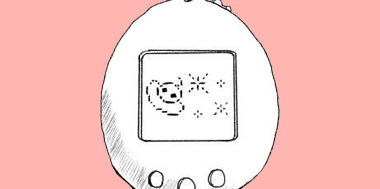
Purr-ogrammed love: A narrative review of virtual pets
Visualising Quaternary megafauna from Sri Lanka’s Sabaragamuwa Basin, this study examines the use of 3D animation workflows to create scientifically credible palaeoart of extinct Quaternary megafauna from Sri Lanka’s Sabaragamuwa Basin.

Toward an interdisciplinary 3D animation design process for palaeoart
Visualising Quaternary megafauna from Sri Lanka’s Sabaragamuwa Basin, this study examines the use of 3D animation workflows to create scientifically credible palaeoart of extinct Quaternary megafauna from Sri Lanka’s Sabaragamuwa Basin.
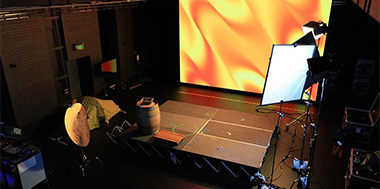
Extending Virtual Production 2025
The Extending Virtual Production project was a faculty-funded initiative within AUT’s Design and Creative Technologies faculty in 2025, aimed at pushing the capabilities and creative potential of the university’s state-of-the-art Virtual Production Studio.
Documentary in the Age of AI
Documentary in the Age of AI is a distinguished contribution that moves beyond uncontentious debates on AI-generated creativity. It incisively examines the impact of generative AI across the entire documentary workflow as a creative act of ‘representing’ factuality.
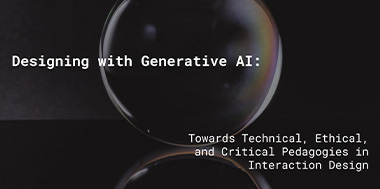
Designing with Generative AI
This paper reflects on some developing pedagogical approaches for introducing technical, ethical and critical engagement with generative artificial intelligence (GenAI) in interaction design (IxD) education.
The Life Cycle of an Idea
The project explores how artificial intelligence is reshaping creative practice, asking how ideas are formed, developed and shared, and how creative roles, authorship and collaboration are changing in response.
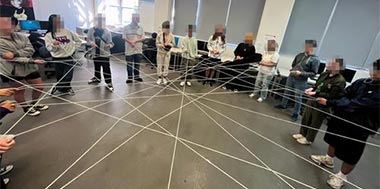
Integrated Design Practice
A reflection on combining Animation, Visual Effects & Game Design for first year undergraduate students
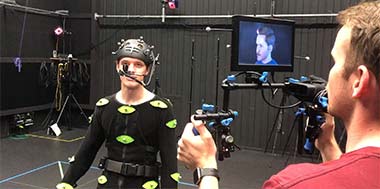
Pedagogical strategies for teaching Virtual Production pipelines
The incorporation of LED walls and virtual production tools in the film industry is a recent development that has significant pedagogical implications (BLISTEIN, 2020; FARID and TORRALBA, 2021)
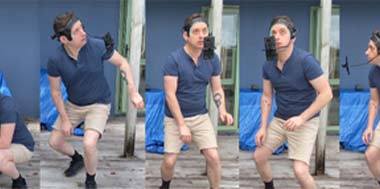
The animator's sensorium: The impact of acting and animation experience on creating reference performances
This article presents an initial investigation into strategies for creating reference performances for animation.
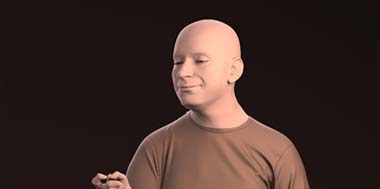
Vactor ontologies: Framing acting within a motion capture context
While an actor’s performance in a stage play may be seen as a continuous and unmediated form of acting, an actor’s performance in a film is constructed through shot framing, editing, effects work, and other cinematic apparatuses.
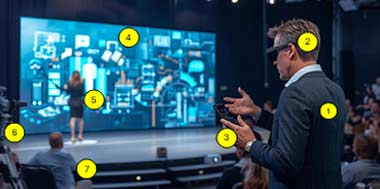
Augmented Information System for Virtual Production Supervision using Smart Glasses
Using augmented reality smart glasses, this project explores new ways to support virtual production supervision by presenting real-time studio data, improving efficiency, oversight, and collaboration in complex production environments.
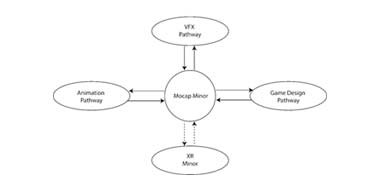
A Pedagogical Workflow for Interconnected Learning: Integrating Motion Capture in Animation, Visual Effects, and Game Design: Major/Minor curriculum structure that supports the integration of Motion Capture with Animation, Visual Effects and Game Design T
This paper presents a case study in a curriculum structure that aims to integrate specialised course content across a range of primary study pathways.
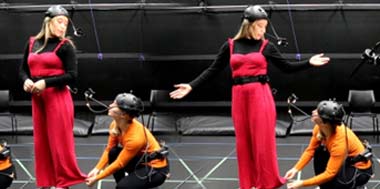
Animation-directed embodied performance technique (ADEPT): A framework for creating better animation video reference
Across animation curricula, there is no unified or industry-recognised framework for developing students’ performance skills through either observation or direct embodied practice.

Epiphanic resolution: The effect of video compression on the believability of computer-generated characters
This article examines the effects of video compression on the believable integration of computer-generated (CG) characters among live-action film elements.
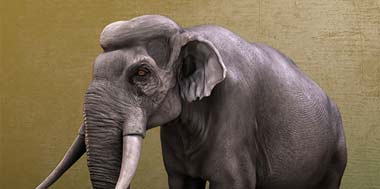
Muscular headband or sexual display? A practice-oriented case-study for producing scientifically informed palaeoart of Palaeoloxodon namadicus sinhaleyus
Sri Lanka (SL) is home to a diverse array of extinct megafauna endemic to the island, many of which are only known from fossils excavated in the early and mid-Twentieth Century.
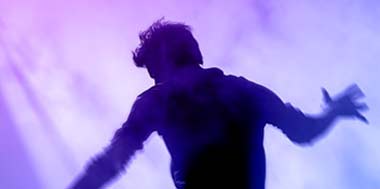
Performing animation: Practical foundations for better video reference
This article establishes a case for the narratological and performance utility of an embodied approach to creating video reference for animation.
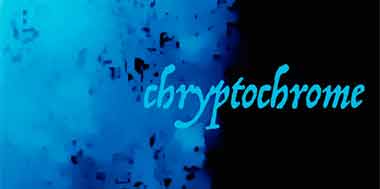
Chryptochrome: how can the materiality of mobile LiDAR technology be used as a metaphor for eco-conscious storytelling
This practice-based film explores smartphone LiDAR as an eco-aesthetic tool, using pulsed light and algorithmic uncertainty to examine human–machine perception and vegetal presence within mobile ecological filmmaking.